


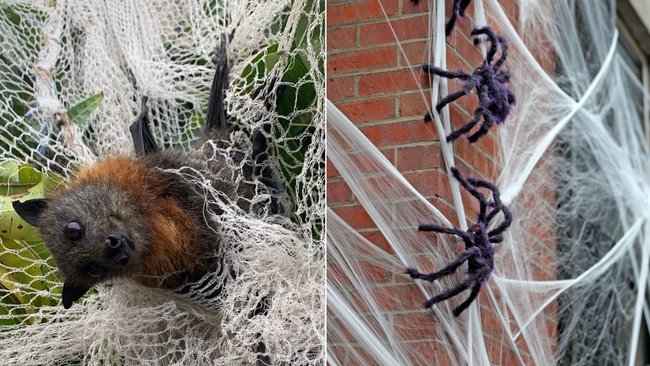
Halloween enthusiasts have been urged to avoid certain decorations this month.
Marion Council in the southern suburbs of Adelaide will hand out fines of more than $300 for residents caught placing artificial spiderwebs on public footpaths, trees or fencing.
WATCH THE VIDEO ABOVE: Adelaide council threatens fines for fake cobwebs.
Know the news with the 7NEWS app: Download today
Private property remains exempt from the South Australian penalties, but environmentalists have been urging those who celebrate the spooky season to be aware of the harm certain decorations can cause.
Experts say fake cobwebs can create sticky traps for native birds, which are nesting as Australia’s spooky season overlaps with spring.
Last year in Sydney, Willoughby City Council and Inner West Council warned residents of the harms.
“Fake spider webs, while spooky, can be harmful to birds and other wildlife. They can get tangled or even eat the plastic, which hurts them,” Willoughby City Council said on social media.
“Can you take the challenge of using decorations that are safer for nature?”
Inner West Council similarly posted a plea for an eco-friendly Halloween.
“Let’s avoid the horror of dangerous decorations during spooky season!” it said.
More decorations in the firing line
Fishing line, balloons and plastic ropes or strings were added to the council list of decorations that are unsafe for native wildlife.
It suggested the use of straw, organic cotton wool, sticks, twigs, leaves, pumpkins and upcycled or reusable decorations.
Wildlife rescue service WIRES told 7NEWS.com.au that, while there is not enough data on the direct link between Halloween decorations and the impact they have on the environment at this stage, wildlife entanglement is a huge issue.
“Entanglement is a common call to the WIRES 24/7 Rescue office from members of the public to report animals trapped in items ranging from sports netting through to fishing line,” a WIRES spokesperson said.
“Many Halloween decorations such as fake snow and spider webs are also potential risks for our native wildlife especially birds, possums, gliders, bats and lizards.”

‘These cobwebs are put up for weeks’
Perhaps the scariest thing about the Halloween decorations is the reluctance to acknowledge the impact that single-use plastic products can have on our environment.
Bird expert Dr Grainne Cleary said the synthetic cobwebs “are a big problem … because they are sticky”.
“At this time of year, a lot of birds are nesting and they’re just exploring their environment and they can get caught.
“Think about your fairy wrens, think about your finches. These are very small birds and they can get tangled up in the cobwebs. We also have birds who can actually use the cobwebs to line their nest.
“Birds use what they find in the local environment and if we’re putting up these fake cobwebs, they’ll investigate them.
“When they use them in their nests, the baby birds get tangled up in them. Here, we’re in spring, we have baby birds around. We need to protect them.
“It’s not one day of the year. These cobwebs are put up for weeks.”
Aside from the potential short-term effects on wildlife, single-use plastic decorations can also have long-term impacts on the environment.
While there is little data on the volume of Halloween waste in Australia, a UK study estimates costumes in the country alone equate to about 2000 tonnes of waste annually.
The Australian Retail Association has said that yearly Halloween spending can reach about $450 million in Australia, with about 32 per cent of that spent on home decorations likely to end up in landfill.


